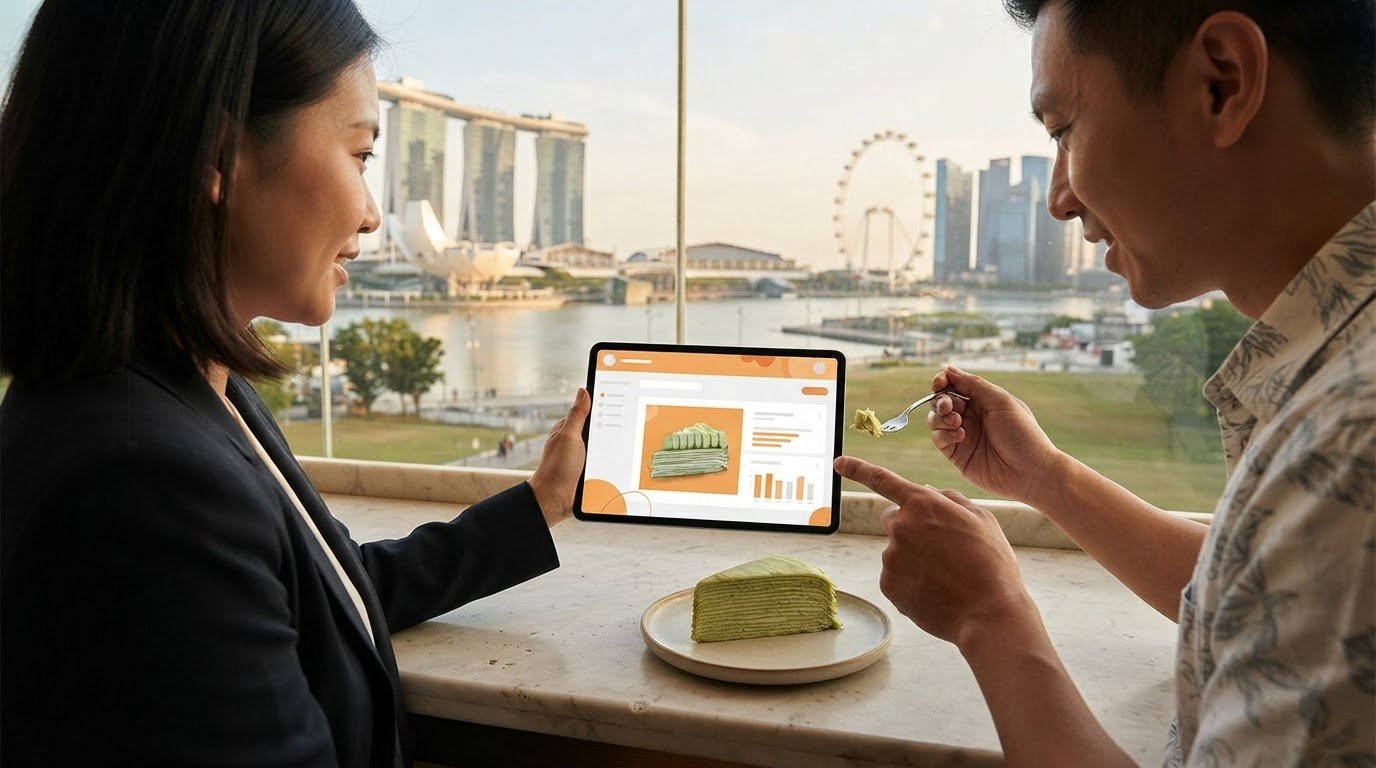
A Lazada marketing campaign starts with a clear product selection: choose the listings to promote, then align the audience, creative and performance measures with your goal. When adding products manually, prioritise the individual listings that best fit the campaign rather than treating every item in your catalogue alike.
It’s easy to think campaign setup ends once products are selected. In practice, the selection is only one part of the work. Product relevance, clear creative and useful reporting all shape how you assess a campaign and decide what to adjust.
This guide explains how Lazada campaign management works for Singapore sellers, how to approach adding products manually, and how audience targeting and creative support your campaign objective. It also covers the metrics that help you interpret results, including impressions, click-through rates and conversions, so you can make decisions based on performance rather than assumptions.
Key Takeaways
- Choose campaign products based on the promotion’s goal, and use the campaign details to keep track of registration deadlines.
- Build audience segments around shopper needs and behaviour instead of relying on broad demographic assumptions alone.
- Make campaign creative easy to understand, with clear product images and descriptions that support the offer.
- Read impressions, click-through rates, conversions and sales together to understand where a campaign is gaining or losing momentum.
- Save reporting decisions for action: promoted-products reports can show changes made during the past 30 days, while the data is available for 90 days.
Lazada Marketing Campaign Management in Singapore
For Singapore sellers, marketplace campaign management coordinates selected products, promotions, advertising and performance tracking around a sales objective. Lazada’s Birthday Sale and 11.11 Sale are examples of special campaigns. Sponsored Products can seek prominent product placements in search results. A practical workflow is to select relevant listings, review campaign details and deadlines, then assess traffic, sales and advertising performance.
How does Lazada’s campaign compare with Shopee’s promotions in Singapore? Lazada’s Birthday Sale and 11.11 Sale are examples of its campaigns, while Shopee runs separate promotions. Compare eligible products, offer terms and advertising options for each event. A promotion mechanic on one marketplace should not be assumed to apply on the other.
What is Lazada’s latest marketing campaign in Singapore? One Singapore 3D out-of-home campaign example is dated 2023 by Untitled Project. Its anamorphic creative used a QR code to direct commuters to an offer site, linking outdoor advertising with an online promotion.
What are the dates and key milestones of Lazada’s Singapore campaign? The reported milestones include an out-of-home campaign revealed on 9 October and a branded second phase running from 9 to 16 October. A campaign article shows the date 13 October 2021; Untitled Project dates its 3D out-of-home example to 2023.
What discounts, vouchers, and free-shipping offers are available? Offers vary by promotion and participating products. Review the promotion terms to understand product eligibility and shipping conditions.
Which Lazada campaign deals apply to specific product categories or brands? Each promotion sets its eligible products and participating brands. Match the deal to the exact listing before featuring it in campaign creative, so shoppers see an offer that applies to the item they are considering.
How can shoppers find and claim Lazada campaign vouchers? Follow the campaign’s official Lazada promotion or QR destination, review its terms, and apply an eligible voucher at checkout.
What payment methods and bank promotions are included in Lazada campaigns in Singapore? Payment and bank promotions depend on the campaign and checkout eligibility. Before completing an order, review the terms shown for the selected product and payment option.
What are the risks of fake Lazada campaign links or promotional scams? Fake links can imitate promotion pages and seek account or payment details. Use Lazada’s app or official channels, and avoid entering credentials through unexpected messages or unfamiliar links.
Creative and media choices also shape campaign management. In the Singapore 3D out-of-home example, the situation was a need to draw commuters’ attention; the action was anamorphic creative paired with a QR code; the result was a route to an online offer. Sponsored Products can support product discovery in search. Assess impressions, click-through rates and conversions alongside sales.
For sponsored search advertising, align promoted listings with the offer and intended audience. If impressions rise without clicks, review the product image and relevance. If clicks rise without conversions, assess whether the listing and promotion match shopper expectations. Lazada and Shopee e-commerce marketing connects marketplace planning with advertising activity for Singapore sellers.
Target audience demographics and segmentation
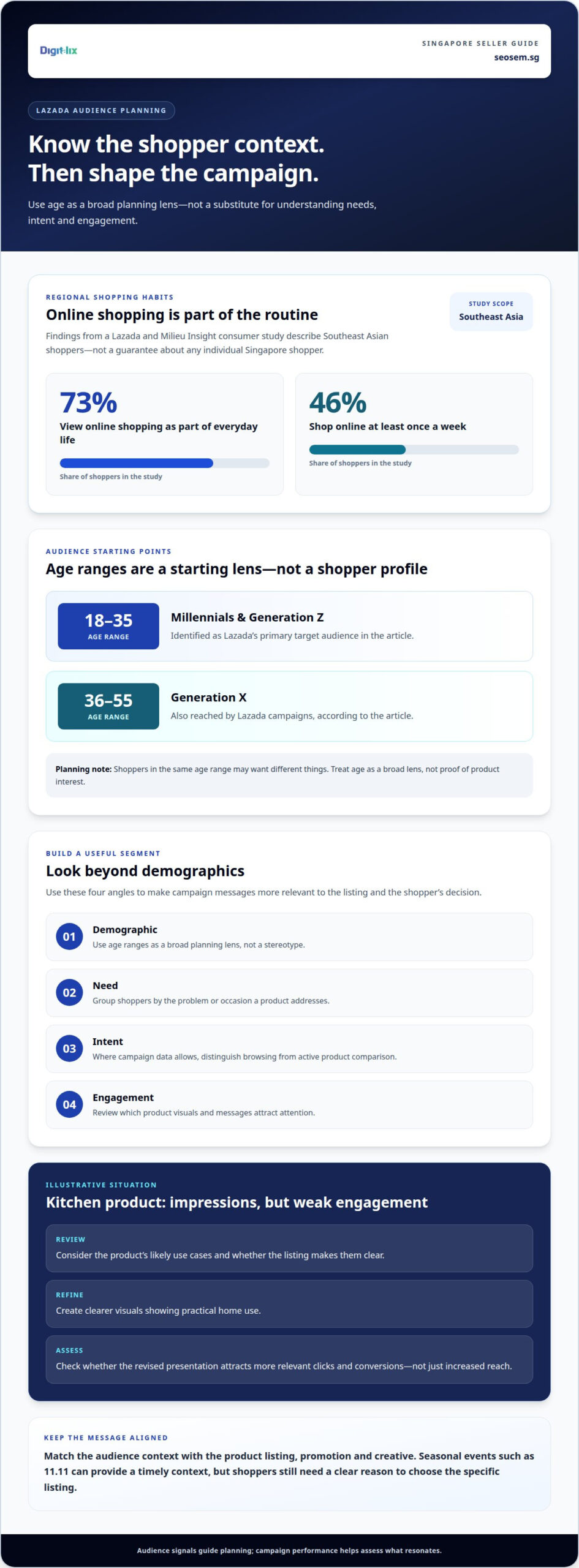
Lazada campaign planning in Singapore should begin with a useful distinction: age describes a group, but purchase intent explains why someone may click. Lazada primarily targets millennials and Generation Z consumers aged 18 to 35, while also reaching Gen X consumers aged 36 to 55. Treat these ranges as starting points, not proof that every shopper in an age group wants the same product.
A Lazada and Milieu Insight consumer study found that 73% of Southeast Asian shoppers view online shopping as part of everyday life. The study also found that 46% shop online at least once a week. These findings describe regional habits, not a guarantee about an individual Singapore shopper. They do show why campaign messages should reflect shopping context, product need and purchase readiness.
Build audience segments around the decision each shopper needs to make. For a home appliance, one group may compare practical features, while another may be looking for a replacement. A personal-care listing could highlight routine and product benefits; a gift product could focus on occasion and presentation. Use the listing, promotion and creative to keep each message relevant.
- Demographic: Use age ranges as a broad planning lens, not a stereotype.
- Need: Separate shoppers by the problem or occasion a product addresses.
- Intent: Distinguish browsing from active product comparison where campaign data allows.
- Engagement: Review which product visuals and messages attract attention.
Consider this illustrative situation: a seller promotes a kitchen product to a broad audience, but the listing receives impressions without strong engagement. Review its likely use cases and create clearer visuals showing practical home use. Then assess whether the revised presentation attracts more relevant clicks and conversions, rather than focusing on increased reach alone.
Campaign creative should also reflect how people participate in seasonal shopping. Lazada events such as 11.11 give sellers a timely context, but the audience still needs a clear reason to choose a specific listing. Pair the event message with a product benefit, then assess impressions, click-through rates and conversions together. If visibility rises without clicks, adjust the visual or message before expanding the audience.
For a Singapore seller, the strongest segmentation approach connects audience, product and message in one plan. Discuss audience-focused campaign content when your listing needs a clearer message for different shopper needs.
Understanding Lazada’s platform, policies, algorithms and seller tools
Lazada brings together product listings, campaign participation and advertising tools. Treat the terms displayed for each campaign as its operating rules. They define eligible products, offer conditions and participation steps. Following a clear process helps prevent mismatches between prices, promotions and listings from reaching shoppers.
What are the terms, exclusions, and minimum-spend rules for campaign offers? Campaign details set the offer conditions, including eligible products, exclusions and any minimum spend. Check these terms against each listing before featuring the offer, as a voucher may apply only to selected products, not the entire catalogue.
How can sellers join Lazada’s marketing campaigns, and what fees or requirements apply? Open the campaign details, review the requirements and submit eligible products before the displayed registration deadline. Check the participation charges and listing conditions shown, as terms can differ between campaigns.
Product presentation gives sellers practical control over how listings attract shoppers. Make the store responsive to different screen sizes, and ensure product images and descriptions are easy to understand. For example, a phone-accessory listing should show the item clearly and explain its relevant features. This makes the offer easier to assess on mobile and desktop.
Lazada uses dynamic pricing, adjusting prices based on demand, stock levels and competitor pricing data. Sellers can monitor similar products to inform their pricing strategy. Treat these comparisons as context, not an automatic reason to cut prices. A campaign price still needs to support the offer and the seller’s commercial goals.
Customer reviews and messages offer another practical source of insight. Reviews can reveal preferences, concerns and expectations, while seller replies should be prompt and courteous. If reviews repeatedly mention confusion about a product feature, clarify it in the listing. This connects customer feedback to a specific improvement instead of prompting broad changes without a clear reason.
Consider this illustrative situation: a product receives attention, but shoppers raise the same question in reviews. Refine the description and respond clearly to customer messages. Then assess whether shoppers’ concerns are easier to resolve and whether listing performance changes. Track the results rather than assuming one edit caused a shift in sales.
Do not treat Lazada’s algorithm as a fixed checklist of ranking shortcuts. Use seller tools and campaign reports to guide decisions: check listing eligibility, monitor similar-product pricing, review customer feedback, and compare advertising impressions, clicks and conversions. Sponsored Products can seek prominent search placements, but placement alone does not prove campaign success.
For each Lazada promotion, follow a repeatable sequence: review the rules, select eligible listings, confirm offer details, then monitor results. This aligns platform requirements, product presentation and advertising, and gives you a sound basis for adjusting the next campaign.
Campaign creative concept
A Lazada marketing campaign needs a creative idea that connects a product benefit with a shopper’s reason to act. During a seasonal shopping event, the event name can provide context, but the product message must explain what the item offers. Align the main visual, offer wording and product listing so shoppers know what to expect after clicking.
Start with one objective, such as introducing a product or supporting a seasonal sale. Then choose a use case that makes its value concrete. For example, show a desk organiser keeping a compact workspace tidy. The visual gives shoppers a clear reason to engage, while a concise description reinforces the selling message.
Build the creative around a straightforward sequence:
- Identify the product: Make the featured item easy to recognise.
- Show its use: Demonstrate a practical benefit or occasion.
- Explain the offer: Keep promotion wording consistent with its terms.
- Guide the next step: Direct shoppers to the relevant listing or promotion.
Lazada uses email campaigns, social media and on-site banners to promote major shopping events. Keep the central idea consistent across placements while adapting it to each format. A banner can foreground the item and offer; a social post can show the product in use. This gives shoppers a recognisable message wherever they encounter the promotion.
Interactive activities can give shoppers a reason to participate. Lazada uses features such as spin-the-wheel activities and lucky draws to engage users. For an illustrative concept, connect an event-themed product story to a platform activity. If a standard product post attracts limited interaction, give shoppers a relevant way to participate, then assess whether engagement and product visits change.
Consider another example: a useful household product needs a distinct selling angle during a busy promotion. Create a visual showing a recognisable problem and the product’s practical use, then carry that benefit into the listing description. Assess whether the creative attracts clicks and whether those visits lead to conversions.
Before publishing, match every image and description to the actual listing. Show the item clearly and explain its features, benefits and specifications. Keep the offer consistent across placements. If a Lazada marketing campaign earns impressions without clicks, revise the main visual or message. If clicks do not convert, assess whether the listing delivers on the creative’s promise.
Campaign performance reports and data retention
Lazada reports help sellers connect advertising activity with traffic and sales. Start a Lazada marketing campaign review with its objective, then examine impressions, click-through rates and conversions. Impressions indicate exposure, click-through rate shows whether that exposure earns clicks, and conversions record completed actions. Read these measures together because each describes a different stage of performance.
Use a repeatable review sequence after each promotion. Identify the products and advertising activity in the report, compare impressions with clicks, then examine conversions and sales. Record what changed and what to adjust next. This makes a Lazada marketing campaign report a decision-making tool, rather than a record viewed only after results arrive.
Lazada promoted-products reports can show changes made during the past 30 days. Promoted-products data is available for 90 days. Review relevant information while it remains available, and keep a record of the reporting period, product, activity, results and planned adjustment. This creates a useful reference when the next promotion requires a decision about creative, listings or product selection.
For example, a Singapore seller may see strong impressions but few clicks for a listing. This suggests shoppers are seeing the product without showing enough interest to click. Review its position, image and relevance to the promotion. In the next report, assess whether the click-through rate changes and whether conversions move as well.
Another case starts with clicks but few conversions. Shoppers reached the listing but did not complete the intended action. Review the product page and offer alignment, then compare conversion performance in the next reporting period. Do not attribute the result to one edit unless the campaign record supports that conclusion. A clear change log helps separate evidence from assumption.
For sellers active across Southeast Asia, keep market and campaign records separate. Results from one marketplace or promotion should not automatically define performance elsewhere. Use consistent metric definitions while recording the relevant market and activity. This makes it easier to compare campaigns and recognise patterns without treating different conditions as identical.
Turn each report into an action plan: retain creative associated with stronger engagement, adjust listings that attract clicks without conversions, and investigate product visibility when impressions remain low. Record each decision beside its reporting period. A timely review of each Lazada marketing campaign also preserves context while promoted-products data remains available for 90 days.
Digitalix: Lazada Management
Digitalix supports Singapore sellers with Lazada Management, linking campaign planning, product selection, advertising and performance review. This is useful when setup and reporting need to work as one process rather than as separate tasks. The focus is on clear objectives, suitable listings and evidence from campaign results.
For sellers building visibility beyond the marketplace, Search Engine Optimization (SEO) or Search Engine Marketing (SEM) can complement Lazada activity. Shopee Management can also support businesses coordinating their presence across both marketplaces. The right mix depends on your sales priorities, resources and how customers find your products.
If you want a more structured approach to marketplace campaigns, contact Digitalix to discuss your Lazada goals.
Turn campaign learning into your next growth decision
Your next Lazada marketing campaign can do more than generate short-term sales. Use it to learn which products warrant stronger visibility, which messages resonate with Singapore shoppers, and how marketplace activity fits your wider acquisition strategy. Plan around one clear business priority, then build on the parts that support it instead of applying the same approach to every listing.
Digitalix can connect Lazada Management with complementary channels when your growth plan calls for them. Search Engine Optimization (SEO) can strengthen organic discovery, while Search Engine Marketing (SEM) can support paid search visibility. Shopee Management can coordinate activity across marketplaces. The right combination depends on your objectives, products and resources.
Take the next step with a focused plan, clear responsibilities and a practical way to learn from each campaign. Consistent decisions provide a stronger foundation for sustainable marketplace growth.
Frequently Asked Questions
What Happens After Setting Up a Lazada Marketing Campaign?
After setup, confirm the campaign is active and the selected listings display the intended offer. Check the product page from a shopper’s perspective: does the title identify the item, and does the description answer likely purchase questions? Then monitor activity against the campaign objective. A discovery-focused promotion calls for attention to product visits, while a sales objective calls for reviewing completed orders.
What Strategies Can Strengthen a Lazada Marketing Campaign?
Connect the product, promotion and message around one shopper need. A seller launching a kitchen tool could focus on a specific cooking task, then use that angle in the listing and promotional creative. Choose the next adjustment based on the observed response rather than changing several elements at once. This makes it easier to understand which creative or offer change influenced shopper behaviour.
Who Is the Target Audience for a Lazada Marketing Campaign?
The audience depends on the product and why someone would buy it. A travel organiser may appeal to shoppers preparing for a trip, while a storage item may suit people seeking a tidier home. Define the audience by that use case, then shape the product message accordingly. Broad age categories can inform planning, but a clear need gives the campaign a more useful focus.
How Should Sellers Choose Products for a Lazada Marketing Campaign?
Choose listings that suit the promotion and have product information ready to support shopper decisions. For example, ensure a home-appliance listing clearly explains the relevant specifications and use. Consider stock readiness and whether the offer suits the product’s role in the campaign. This helps avoid promoting an item that attracts attention but lacks the details shoppers need to decide.
How Can Sellers Tell Whether a Lazada Marketing Campaign Is Working?
Judge performance against the campaign’s original goal, not a single metric. If the goal is product discovery, examine whether shoppers reach and engage with the listing. If the goal is sales, focus on completed purchases alongside traffic. Compare the outcome with the campaign’s starting point and record what changed. This gives the next planning cycle a clearer basis than impressions alone.
What Should Sellers Record for Their Next Lazada Marketing Campaign?
Keep a concise campaign record with the promoted products, offer conditions, creative version, reporting period and key observations. Note the decision made after reviewing results, such as keeping a product image or revising its description. For example, recording that shoppers clicked but did not purchase can guide a later product-page review. A consistent record carries useful learning into future campaign planning.