Influencer marketing and Instagram ads can reach the same audience, but they do different jobs. In Instagram marketing in Singapore, ads use paid placements to target people and drive outcomes such as traffic or sales; influencer marketing uses a creator’s content and audience to build interest and trust. They can also work together, with creator content supporting a paid campaign.
Instagram Shopping adds another step to the decision: it can connect product discovery with shopping within the platform. The right approach depends on your goal, whether you want broader awareness, measurable conversions or a clearer path from content to purchase.
This guide explains how agency services, Reels and other creator content, advertising and Instagram Shopping differ. You’ll learn when to use ads, when influencer marketing may be a better fit, and how to choose an approach that supports your business objectives.
Key Takeaways
- Choose between influencer marketing and paid ads based on whether your priority is creator-led trust or targeted campaign outcomes.
- Match Reels, Stories and carousel content to the message you need to deliver, not just the format that looks most engaging.
- Set a clear campaign objective before launching ads so you can assess performance against the right measures.
- Consider how Instagram Shopping can shorten the path from product discovery to purchase for your customers.
- Connect Instagram activity with your wider marketing channels when a coordinated approach better supports business growth.
1. What services does an agency provide for Instagram marketing in Singapore?
An Instagram marketing agency can manage campaigns from audience research through reporting. For a Singapore SME, work may begin with a specific goal, such as generating enquiries or increasing product interest. The agency then plans the audience, message and creative, sets up the campaign, monitors delivery and reports on results. Each stage should support the objective, so you can assess decisions against a clear outcome.
Audience targeting starts with defining who is most likely to respond. Depending on the campaign, an agency may use location, interests, behaviours or previous interactions to shape an audience. Retargeting focuses on people who have already engaged, such as website visitors or video viewers. Follow-up messages can reflect that earlier interaction rather than giving everyone the same introduction.
Research and setup turn a campaign brief into practical decisions. The agency reviews the offer, audience, existing creative and destination before choosing an objective. It prepares the targeting, placements, creative and tracking, then monitors delivery after launch. If results point to a mismatch, the agency can adjust the audience or message. A useful report explains what the campaign achieved and what to do next.
Instagram is suited to visual, mobile-first communication. Facebook can support community building and broader reach, while TikTok is another option for short-form video. The right choice depends on audience behaviour, the available creative and the campaign goal. Businesses planning across channels can coordinate activity through Facebook and Instagram marketing, with each platform assigned a clear role.
Common risks include targeting too broadly, using inconsistent messages for new and returning audiences, and judging performance by engagement alone. Changing several campaign settings at once can also make results difficult to interpret. Structured testing, consistent tracking and clear reporting help reveal which changes matter. For Singapore brands, the campaign destination should match the ad’s promise, so the next step feels relevant.
Case studies are most useful when they explain the campaign objective, period and measurement method. Awareness campaigns may assess reach, while sales campaigns focus on conversions and return on ad spend (ROAS). ROAS compares attributed revenue with advertising spend, but does not alone show profit or establish that advertising caused every sale. The EDGE Grant has an annual cap of S$100,000, according to Enterprise Singapore.
For a Singapore business, Instagram can support visual discovery, while Facebook may be better suited to community activity or broader reach. TikTok is another option for short-form video when its style fits the audience and message. These channels are not interchangeable; let campaign objectives and customer behaviour guide the mix.
2. Instagram Marketing in Singapore: Creator-Led Reels, Stories and Carousel Content
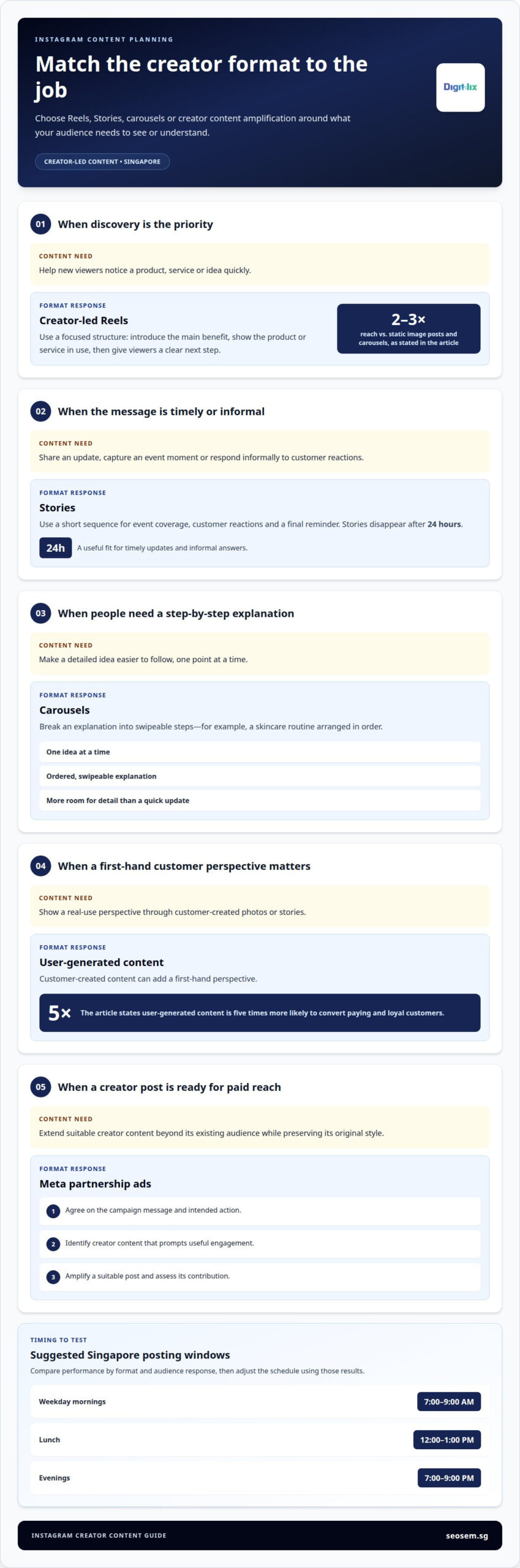
Creator-led content gives Singapore brands a human voice and a recognisable point of view. Reels work well for demonstrations, quick product comparisons and behind-the-scenes clips. Stories suit timely updates, polls and customer reactions, while carousels can break a detailed idea into swipeable steps. Choose a format based on what your audience needs to understand or do next.
Reels in Singapore can generate two to three times more reach than static image posts and carousels. Put that discovery potential to work with a focused structure: introduce the main benefit, show the product or service in use, then give viewers a clear next step. For example, a café creator could show how a seasonal drink is prepared and where customers can try it.
Stories disappear after 24 hours, making them useful for timely updates, event coverage and informal answers. A creator could use a short sequence to show an event setup, customer reactions and a final reminder. Carousels provide room for a more detailed explanation, such as a skincare routine arranged by step. Customer-created photos and stories can add a first-hand perspective; user-generated content is stated to be five times more likely to convert paying and loyal customers.
Educational content can build brand credibility by answering real customer questions. A Singapore home renovation creator might explain how to compare flooring materials, while a tuition educator could demonstrate a problem-solving method. Keep each video focused on one useful takeaway, then use the caption to add context and direct interested viewers to a relevant next step.
Meta partnership ads let brands amplify creator content through paid advertising. This can extend a strong creator post beyond its existing audience while preserving its original style. A practical workflow is to agree on the campaign message and intended action, identify creator content that prompts useful engagement, then amplify a suitable post and assess its contribution.
Niche creators can bring focused expertise and a close connection to a specific community, while creators with broader audiences may support wider awareness. Choose based on audience relevance, content quality and campaign objective, not follower count alone. A content calendar can give each creator asset a role across Reels, Stories and carousels, with engagement and conversions informing future plans.
For Singapore posting times, test weekday mornings from 7:00 to 9:00 AM, lunch from 12:00 to 1:00 PM, and evenings from 7:00 to 9:00 PM. Compare performance by format and audience response, then adjust the schedule using those results. Discussing a creator content plan can help turn these ideas into a consistent publishing approach.
3. Instagram advertising agency services in Singapore
Instagram advertising services can include campaign planning, setup, monitoring, optimisation and reporting. In Singapore, a business might use an awareness campaign to introduce a new service, then run a separate campaign to encourage enquiries. An agency aligns the objective, audience, creative and destination with a defined business need. It can then review results and recommend which campaign elements to refine.
Optimisation is a decision process, not simply a matter of increasing spend. Review audience response, creative performance and the campaign destination, then adjust the element most relevant to the objective. Testing a new message against the existing one can show which attracts more useful actions. Keep changes focused so you can interpret the effect of each adjustment.
Paid advertising can extend a message beyond organic visibility and direct attention towards a chosen action. Its value depends on your business goal: a local service may prioritise enquiries, while a retailer may focus on product purchases. Measure what fits the goal rather than treating likes or views as proof of sales.
| Campaign objective | Useful indicators | What the review can clarify |
|---|---|---|
| Awareness | Reach and impressions | Whether the campaign is being delivered to an audience |
| Traffic | Clicks and cost per result | Whether people respond by visiting the destination |
| Enquiries or conversions | Clicks, cost per result and completed actions | Whether the campaign supports the intended response |
Set an initial test budget based on the objective, audience and creative plan. Review results before scaling, and adjust the campaign if delivery or response falls short of the target. Keep media spend separate from management work in internal reporting. This helps you assess whether results justify further investment without assuming a larger budget will automatically improve performance.
For Singapore promotions, clearly identify paid creator relationships and state offer terms accurately. For example, a business running a limited-time offer should make the conditions and redemption process easy to understand in both the ad and its destination. Clear information helps avoid confusion and keeps the campaign message consistent.
Influencer collaboration costs in Singapore vary according to the creator, audience fit, deliverables, production requirements and planned content use. A Reel, a Stories sequence and a package that includes paid amplification have different scopes, so the requested work affects the cost. Define the deliverables and intended use before comparing proposals.
The right strategy depends on your business objective and customer journey. Awareness campaigns can introduce a brand, traffic campaigns can lead people to a relevant page, and conversion campaigns can focus on a specific action. An agency’s FAQ should clarify its scope, reporting, optimisation process and how campaign metrics connect to business outcomes.
4. Instagram ad formats
Choose an Instagram ad format based on the message and action you want to encourage. A single image can present one clear offer, a video can demonstrate how a product works, and a carousel can combine multiple images or videos in one ad. The visual should make the next step obvious, whether that means learning more, visiting a page or making a purchase.
Reels ads use vertical video, with 9:16 recommended for Singapore businesses. This format suits a product demonstration, a quick service explanation or a short customer scenario. Keep the main message visible on a mobile screen, use captions to support the audio, and introduce the core idea early. A homeware retailer, for example, could show one storage solution in use rather than trying to explain its full catalogue.
Stories ads appear within a sequence of Stories and can deliver a direct, time-sensitive message. Use one visual idea and one call to action, such as viewing a new product or enquiring about a service. Carousel ads work better when people need more details. A retailer could give each card a product feature, while a service business could outline the process from first step to final result.
For awareness, choose a visual that communicates the brand or offer quickly. For consideration, use a video or carousel to explain benefits and answer likely objections. For conversions, keep the offer consistent with the destination page. If an ad promises a specific promotion, the linked page should show the same terms and make the next action easy to find.
A/B testing helps identify which creative choice better supports the campaign objective. Compare one variable at a time, such as a product image against a demonstration video, or a short headline against one focused on benefits. Keep the audience and objective consistent during the test. Otherwise, you cannot tell whether the format or another campaign change influenced performance.
Use consistent measurement across formats. Reach and impressions help assess awareness; clicks show whether creative encouraged a visit; cost per result helps compare delivery against the chosen action. Many views do not automatically mean strong conversion performance. Review the metric that matches the campaign goal, then use it to guide the next creative iteration.
Production planning also affects format choice. Before filming a Reel, define the message, key visual, location and final action. A simple shot list keeps the video focused and can reduce reshoots. For a carousel, map the sequence first: introduce the problem, explain the solution, then close with a clear next step. This makes each asset useful instead of forcing one creative into every placement.
For Instagram marketing in Singapore, test formats against your audience and objective rather than assuming one visual will suit every campaign. Record the creative, placement and outcome for each test. This gives the next campaign a practical starting point and makes optimisation more deliberate.
5. Instagram Shopping and social commerce
Instagram Shopping connects product discovery with purchase consideration through tagged products in posts or Stories. Instagram Shopping Ads can tag products so users can shop without leaving the app. For Singapore retailers, the value is a shorter path from a visual post to product information, not a guarantee of completed sales. Treat social commerce as one part of the customer journey.
Product discovery is a clear use case: 74% of Instagram users discover new products on the platform. A local fashion label, for example, can feature a garment in a post and tag the item, helping interested viewers move from inspiration to product details. The post still needs a clear visual, relevant caption and accurate product information to support that next step.
Plan the shopping journey before publishing. First, select products that suit the campaign and audience. Next, make sure images and descriptions communicate useful details, such as material, fit or intended use. Then connect the creative to the relevant product tag. A homeware retailer might show a table setting and tag the featured pieces, rather than sending every viewer to a general catalogue.
Instagram Shopping also changes how social media content can support traffic and sales. An organic post can introduce an item, while a tagged shopping ad can give product-focused content paid reach. Measure the roles separately: discovery and engagement show how people respond to content, while product views and completed purchases indicate later-stage activity. This distinction prevents a popular post from being mistaken for a sales result.
For Singapore businesses selling across Instagram, Shopee and Lazada, keep product details and campaign messages consistent across channels. Customers may lose confidence if they see one price or product description on Instagram and different information on a marketplace. A coordinated presence gives each channel a clear role: Instagram can showcase the product visually, while marketplace listings support browsing and transactions.
Facebook can complement Instagram as part of a wider social media plan. Use data from each platform to see which content attracts relevant attention, then direct product-focused audiences to the most suitable shopping destination. Don’t assume every Instagram viewer is ready to buy. A useful product demonstration or customer story can build consideration before a later shopping interaction.
Review the entire path, not just the tagged post. Check whether product details are clear, the destination matches the creative, and where customers stop engaging. If a post gets attention but few product interactions, revise the call to action or featured item. If product views rise without purchases, review the listing and the steps between interest and checkout.
Build a social commerce plan around product discovery, accurate listings and measurable next steps.
Digitalix: Instagram Marketing
Digitalix helps businesses in Singapore plan Instagram Marketing around a clear objective, whether the priority is audience awareness, enquiries or product discovery. Its work brings campaign strategy, creative content and performance measurement together, giving each format a defined role. When Instagram needs support from other channels, Search Engine Marketing (SEM) can improve paid search visibility, while Search Engine Optimization (SEO) supports longer-term organic discovery. Businesses selling through Shopee can also connect social activity with their marketplace presence through Shopee Management. The right combination depends on the customer journey and the action your campaign should encourage.
Turn your Instagram direction into a focused plan
Start by defining the business outcome that matters most, then make every campaign decision serve it. A clear priority connects creative choices, audience focus and measurement without treating reach as the end goal. For Instagram marketing in Singapore, a practical plan should also reflect how customers discover, consider and choose your offer.
Use that priority to decide what your team can handle consistently and where specialist support would help. Digitalix can shape an approach that fits your wider digital activity, rather than treating Instagram as a disconnected channel. A focused plan gives your content and campaigns a clear role and a stronger basis for deciding what to refine next.
Build momentum with a strategy grounded in your customers and business objectives. A considered next step can make your Instagram presence more purposeful and easier to assess.
Frequently Asked Questions
What is the difference between Instagram ads and influencer marketing?
Instagram ads are paid placements managed through campaign settings, while influencer marketing relies on a creator’s content and relationship with their audience. A Singapore café might use ads to promote a booking offer to selected audiences, then work with a local food creator to showcase the dining experience. Ads offer more direct control over targeting and budget; creator collaborations add a personal perspective. Brands can use both when their objectives and creative approach align.
How much does it cost to run Instagram Ads?
Total cost depends on the media budget, audience, campaign objective, creative and management scope. Media spend pays for ad delivery; an agency management fee covers planning, monitoring and optimisation. These are separate costs, so clarify which figures relate to advertising and which to professional services. A business promoting a seasonal offer may set a different budget from one building ongoing awareness.
Do Instagram Ads work for all industries?
Instagram Ads can support businesses in many industries, but performance depends on audience fit, the offer and how clearly the creative communicates value. A visual product may be easy to demonstrate in a short video, while a professional service might need a clear explanation and an effective enquiry path. For Instagram marketing in Singapore, match the campaign objective to customer behaviour rather than assuming every industry needs the same format.
How long before I see results?
Early campaign data can show whether people see, click or engage with an ad, but meaningful business results depend on the objective and customer journey. A click campaign can record visits before a lead campaign generates enquiries. For example, a high-consideration service may require more time for customers to evaluate than an everyday purchase. Track the action that matters to your business and use each campaign review to guide the next optimisation.
What are the services an Instagram marketing agency provides?
An Instagram marketing agency can support campaign research, audience planning, creative production, advertising setup, monitoring and reporting. The scope may also include coordinating organic content with paid campaigns. For example, a retailer launching a product could plan the creative, direct interested audiences to a relevant product page and measure the resulting actions. A useful report connects campaign activity to the goal rather than listing engagement metrics without explaining their business relevance.
Do I need an Instagram account?
A dedicated Instagram profile helps customers identify the advertiser and explore a brand’s posts, but it does not need to be the campaign’s only destination. Depending on the setup, ads can direct people to a suitable website or landing page. Before launch, settle on the business identity shown in the ad and make sure the destination continues the same message. A complete profile can also build confidence when people choose to visit it.
How much do Instagram ads cost in Singapore, including CPM, CPC and CPA benchmarks?
CPM measures cost per thousand impressions, CPC measures cost per click, and CPA measures cost per completed action. No single benchmark applies to every Singapore campaign: industry, audience, creative and conversion goal all affect the result. Compare each metric with the campaign objective and its past performance. For example, a lead-generation campaign should assess the cost per qualified enquiry, not clicks alone.
How do you set up and target Instagram ads for audiences in Singapore?
Start with a clear objective, then define the audience using relevant locations and customer characteristics. A neighbourhood business could focus on people near Orchard or Tampines, while a service covering Singapore may include Jurong, Woodlands, Buona Vista and Paya Lebar. Choose creative that suits the audience, connect it to a relevant destination, and track the intended action. Review delivery and results before adjusting targeting or creative.